



Adire: The Yoruba Indigo Fabric Behind Nigeria's Biggest Textile Revival
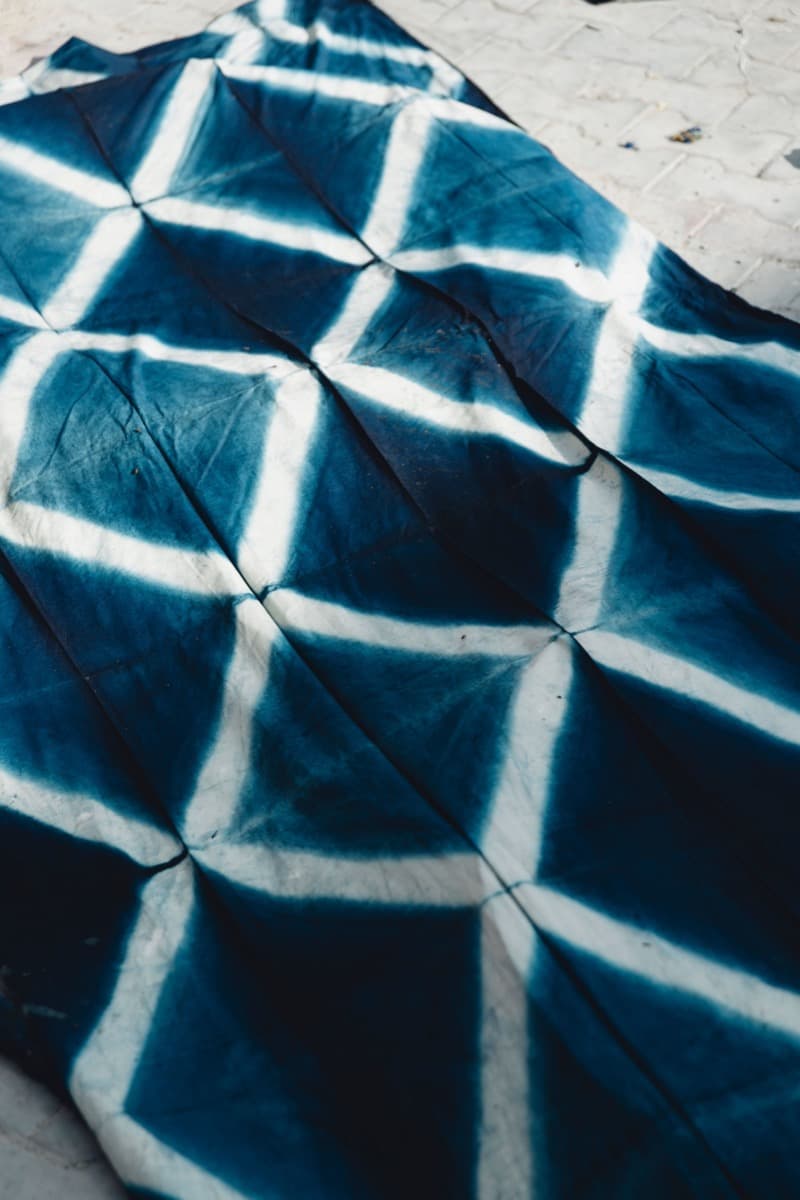
Adire is the Yoruba indigo-dyed cloth tradition centered on Abeokuta, Ogun State — and unlike a lot of "heritage fabric" content, its current relevance isn't a stretch. It's had a real, documented moment at Lagos Fashion Week, and it sits behind one of Nigeria's most internationally recognized fashion labels. Here's what it actually is, and where the current revival is genuinely coming from.
What the Name Means, and the Three Real Techniques
"Adire" is a Yoruba compound built on adi, "to tie" — sources agree on that half. The second half is where they split: it's commonly glossed in English as "tie and dye," reading the second syllable as "to dye," but a few sources, including its own Wikipedia entry, translate it as "to soak" instead. That's a genuine unresolved detail in how the word is documented, not something we're going to flatten into one tidy answer.
What is settled is that adire isn't one technique — it's a family of three distinct resist-dyeing methods:
- Adire oniko — the oldest of the three, made by tying raffia or palm leaf tightly around corn kernels, pebbles, or seeds pressed into the cloth, resisting the dye at each tied point to create small circular or ring motifs.
- Adire eleko — a starch-resist technique, using cassava or maize paste hand-painted onto the cloth with a feather or carved calabash, or, since the early 20th century, applied through cut metal stencils — originally made from recycled tin.
- Adire alabere — a stitched-resist technique, where raffia or thread is hand-stitched into the cloth in a pattern before dyeing, then removed afterward to reveal fine-lined designs.
Abeokuta, and a Real Boom-and-Decline Story
Adire is documented as emerging as a distinctive named textile in Abeokuta during the 19th century, and Abeokuta is widely referred to as the historic capital of adire-making — the Itoku Adire Market there is its historic commercial hub. One source raises a minority claim that Ibadan or Osogbo may actually be more historically significant, with Abeokuta's tradition tracing back to Egba women who returned from Ibadan with the technique — worth knowing, but Abeokuta remains the mainstream reference point and we're not going to overclaim a precise founding date beyond "19th century."
The most interesting, well-documented part of the story is the boom-and-bust in between: cheap imported plain white "shirting" cloth from European merchants in the 1920s and 30s gave Abeokuta and Ibadan dyers a new, affordable canvas, and adire became a major commercial craft that attracted buyers across West Africa. That boom collapsed by the late 1930s, driven by quality problems as synthetic indigo and caustic soda spread and unskilled producers flooded in — a demand collapse the craft, by most accounts, never fully recovered from commercially, right up until its current revival.
The Dye Itself
The indigo source plant is known in Yoruba as elu. We're not going to name a single Latin species with false precision here — sources cite more than one candidate botanical name for West African indigo, and we couldn't pin down one unambiguous answer worth stating as settled fact. What is documented is the traditional process: indigo leaves or balls are fermented in dye pits, with lye from wood ash used to create the alkalinity the dye needs, over roughly six to eight days before cloth is dyed. Getting the deepest blue-black shades can mean dipping the cloth 25 times or more, using anywhere from around 50 balls of indigo for a lighter blue up to 150 for something closer to black.
Adire vs. Ankara
These two get lumped together as "Nigerian print fabric" constantly, but the distinction is clean: adire is hand-made — tied, stitched, or starch-resisted, then dyed, traditionally in indigo — which means every piece carries small irregularities and is genuinely one of a kind. Ankara is industrially wax-printed, machine-produced, and identical across a whole bolt of fabric. That hand-labor is also why adire generally costs more than ankara.
The Current Revival Is Real — Here's What's Actually Verified
This isn't a case of us stretching to call something a trend. Lagos Fashion Week 2025 (late October into November, themed "In Full Bloom") featured adire prominently as a refined, elevated fabric across multiple designers — Pepper Row, founded by Omafume Niemogha, worked adire alongside aso oke, raffia, and cotton; ESO, founded by Tunde Shoremkun, works with adire alongside batik, aso oke, patchwork, and hand-beading. Beyond the runway, later 2026 coverage points to a broader "Made-in-Nigeria" push positioning adire, aso oke, and George fabric toward global luxury markets — though that later coverage reads closer to trade press than rigorous fashion journalism, so we're flagging it as directionally real rather than citing it with the same confidence as the LFW coverage.
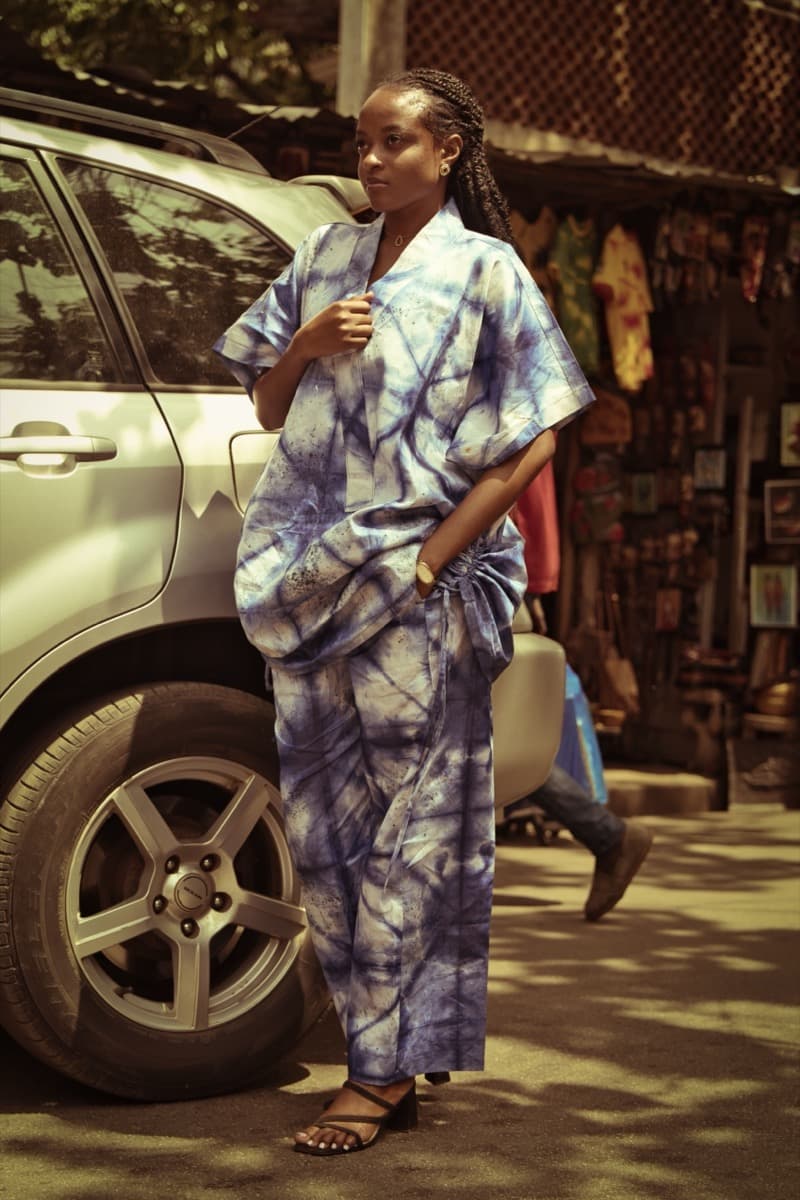
Adire styled as an oversized, contemporary silhouette rather than the fitted traditional cut — part of what's driving its current revival.
Designers and Names Actually Worth Knowing
Two names here are genuinely, independently verifiable, not just repeated across SEO content:
Nike Davies-Okundaye is one of Nigeria's best-known adire and batik artists, trained by her mother, with work held in the collections of MoMA, the Smithsonian National Museum of African Art, Guggenheim Abu Dhabi, the British Library, and the V&A. She founded Nike Art Gallery in Lekki, Lagos — one of the largest galleries in West Africa, with roughly 8,000 artworks and branches in Abuja, Oshogbo, and Ogidi — and has trained thousands of Nigerians in adire and aso oke techniques.
Amaka Osakwe, of the label Maki Oh, has made adire a signature element of her work since debuting at New York Fashion Week in 2012. Michelle Obama wore a Maki Oh blouse on a 2013 trip to South Africa and later hosted Osakwe at a White House "Celebration of Design" event; Lupita Nyong'o and Solange are also documented Maki Oh wearers. This is a real, internationally documented case of adire reaching well beyond Nigerian fashion.
Also worth knowing: Bamidele Abiodun, First Lady of Ogun State, founded Adire Market Week, a real state-backed promotion initiative — its first edition ran April 2022 in Abeokuta with roughly 100 exhibitors under the theme "Authentic African."
What It's Used For Today
Beyond garments — dresses and tailored pieces that blend adire with Western silhouettes, as seen in Maki Oh's and other current designers' work — adire also has a real presence in fine art and gallery collections through artists like Nike Davies-Okundaye. We couldn't find solid sourcing for adire in home décor specifically (cushions, upholstery, and similar), so we're not going to claim that as a documented current use, even though it's plausible.
What to Budget
Pricing here genuinely has no standardized market rate — sellers, design complexity, dye type, and location all move it, and Lagos market prices are commonly negotiable rather than fixed. As a rough reference from retail and marketplace listings: budget adire starts around ₦4,000-₦5,000 per yard, decent-quality intricate designs run ₦5,000-₦20,000 per yard, and designer or hand-painted natural-dye pieces can run ₦15,000-₦50,000 per yard or more, with some premium natural-dye work cited as high as ₦100,000. Treat all of this as a starting reference, not a quote — get a real price from whoever you're buying from.
Ordering Yours
Because every piece of genuine adire is hand-made and slightly irregular by nature, that's not a flaw to fix — it's the whole point, and worth saying explicitly to your tailor if they're used to working with uniform ankara. If you're weighing adire against other Nigerian fabric traditions, our ankara guide and aso oke guide cover the other major options.