



Bubu Gown Styles for Women
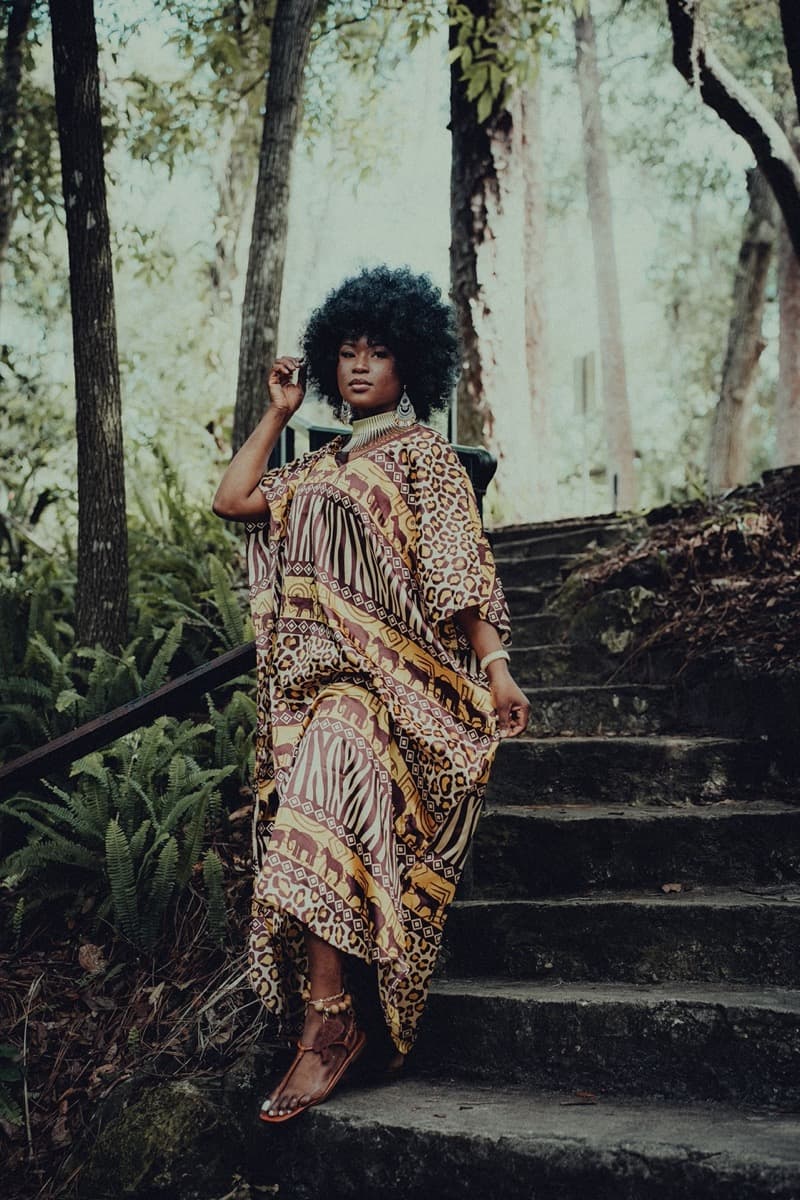
A bubu gown is a loose, flowing, wide-sleeved dress with no fitted waist — the opposite of a corseted or mermaid silhouette, and exactly why it's become shorthand for effortless, put-together style in Nigerian fashion right now. If you've seen the phrase "soft life" or "rich aunty" attached to an outfit, there's a good chance it was a bubu.
Here's what actually defines the style, what it's made from, and what's trending.
What a Bubu Gown Actually Is
A bubu (also spelled boubou) is voluminous and free-flowing by design — no set-in sleeves, no fitted waistline, usually floor-length or close to it. The looseness is the point: it reads as elegant without needing a fitted cut or heavy styling to pull off.
You'll also see "kaftan" used for very similar-looking dresses, and in practice the line between the two is blurry — retailers and designers use both names for near-identical garments. Where people do draw a distinction, kaftan tends to mean something a bit more tailored (a defined front opening, sometimes side slits), while bubu leans wider and more unstructured. Don't treat that as a hard rule — it's a soft, inconsistent distinction even within the industry.
Fabrics
Ankara and lace are the two most common fabrics, often combined in the same dress — an ankara body with lace sleeve or neckline panels is a frequent pairing. Adire (Yoruba tie-dye/resist-dye cloth) is also a real, current choice, especially for a more relaxed, artisanal look.
Aso oke shows up too, but usually as a combination fabric rather than a full aso oke bubu — think an aso oke chest panel or trim on an otherwise ankara or cotton dress, not the whole gown woven. Guinea brocade also appears in bubu styling, sometimes paired with a lace skirt as a "half boubou" look. Some designers are also working in silk, denim, organza, and chiffon for a more contemporary take, though that's less common than the ankara/lace default.
What's Trending
Current styling leans into exaggerated volume and movement — wide butterfly or batwing sleeves, bishop and puff sleeves, kimono-style cuts. Necklines vary widely: deep V, boat neck, wide scoop, off-shoulder, and beaded or embroidered yokes are all in circulation.
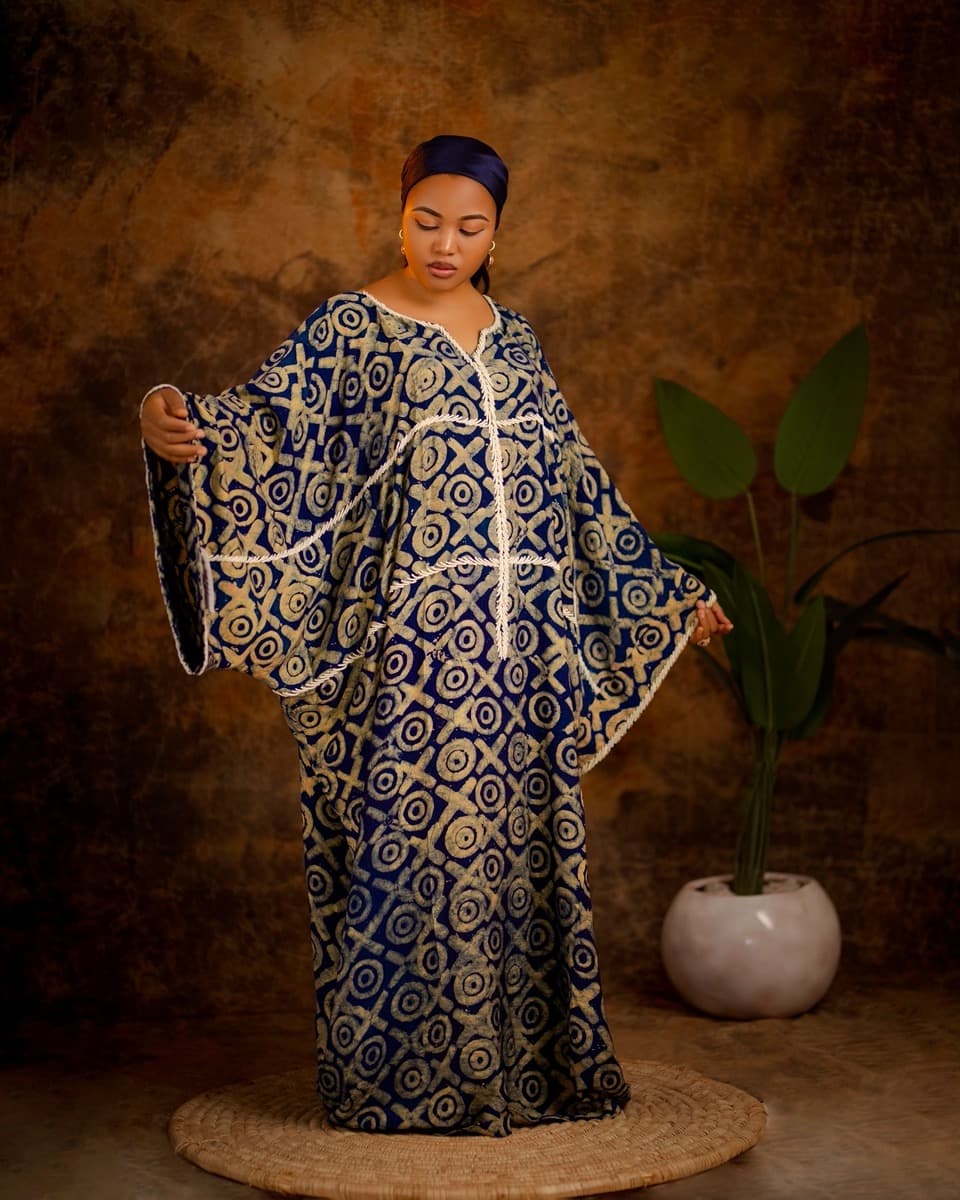
The sleeve is often the whole point — wide, dramatic, and part of what makes a bubu read as effortless rather than plain.
Embellishment is a big part of the current look — hand or machine embroidery, beadwork, laser-cut detailing, ruching, and sequins show up regularly on dressier pieces, while simpler versions lean on the print or fabric alone. Color-wise, bold color-blocking and tie-dye/batik prints are trending alongside metallic brocade accents and deeper, richer tones for formal pieces.
Who Wears It, and When
Bubu gowns cover both ends of the dress-up spectrum — the same loose silhouette works as easy everyday wear (church, brunch, a weekend outing) and as real occasion wear for weddings, owambe, and naming ceremonies, depending on the fabric and embellishment level. A simple ankara bubu reads casual; a heavily beaded or aso oke-trimmed one reads formal.
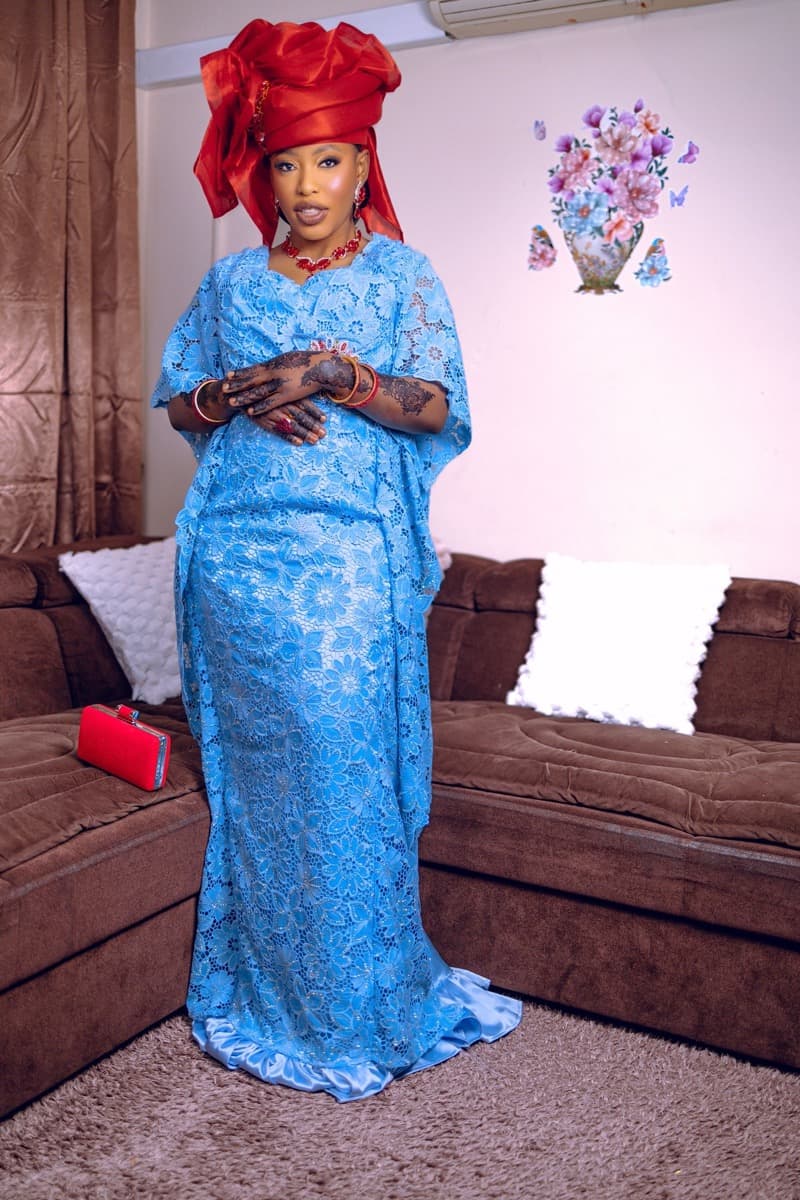
Same loose silhouette, dressed all the way up — lace, embellishment, and a statement gele turn a bubu into event wear.
Designers Worth Knowing
Ahdookeh Fashion, founded by Morenikeji Agoro in Lagos, is a name specifically known for bubu gowns — both making them and publishing detailed style guides on current trends, which made it one of the more useful sources for this post.
What to Budget
Ready-to-wear bubu gowns span a wide range: roughly ₦15,000-₦20,000 at the accessible end, up to ₦32,500-₦59,500 from more established vendors. Premium, designer-made pieces run considerably higher — Ahdookeh Fashion's designer gowns run ₦100,000-₦180,000. A custom-tailored piece typically costs 20-40% more than a comparable ready-to-wear version once fabric, labor, and fittings are factored in. Treat these as a general range rather than fixed pricing — actual cost depends heavily on fabric choice and embellishment.
Caring for Your Bubu Gown
Care depends mostly on the fabric, not the cut:
- Ankara: hand-wash in cool water with a mild soap, avoid soaking longer than 5-10 minutes on first washes since the dye can bleed, air-dry away from direct sun, and iron with a cloth barrier if the dress mixes ankara with lace.
- Lace: gentle hand-wash in cool water, low-heat pressing.
- Beaded or embroidered pieces: dry cleaning is the safer option, to protect the decorative work rather than risk it in a wash.
Ordering Yours
Because so much of a bubu's look comes down to fabric choice and embellishment rather than a complex fitted cut, it's a relatively approachable style to order — the main decision is which fabric combination and how much detailing you want. If you're weighing fabric options, our guides to ankara and aso oke cover the two most common choices in more depth.