



Wedding Gowns in Nigeria: The Real History Behind the Bride's Second Outfit
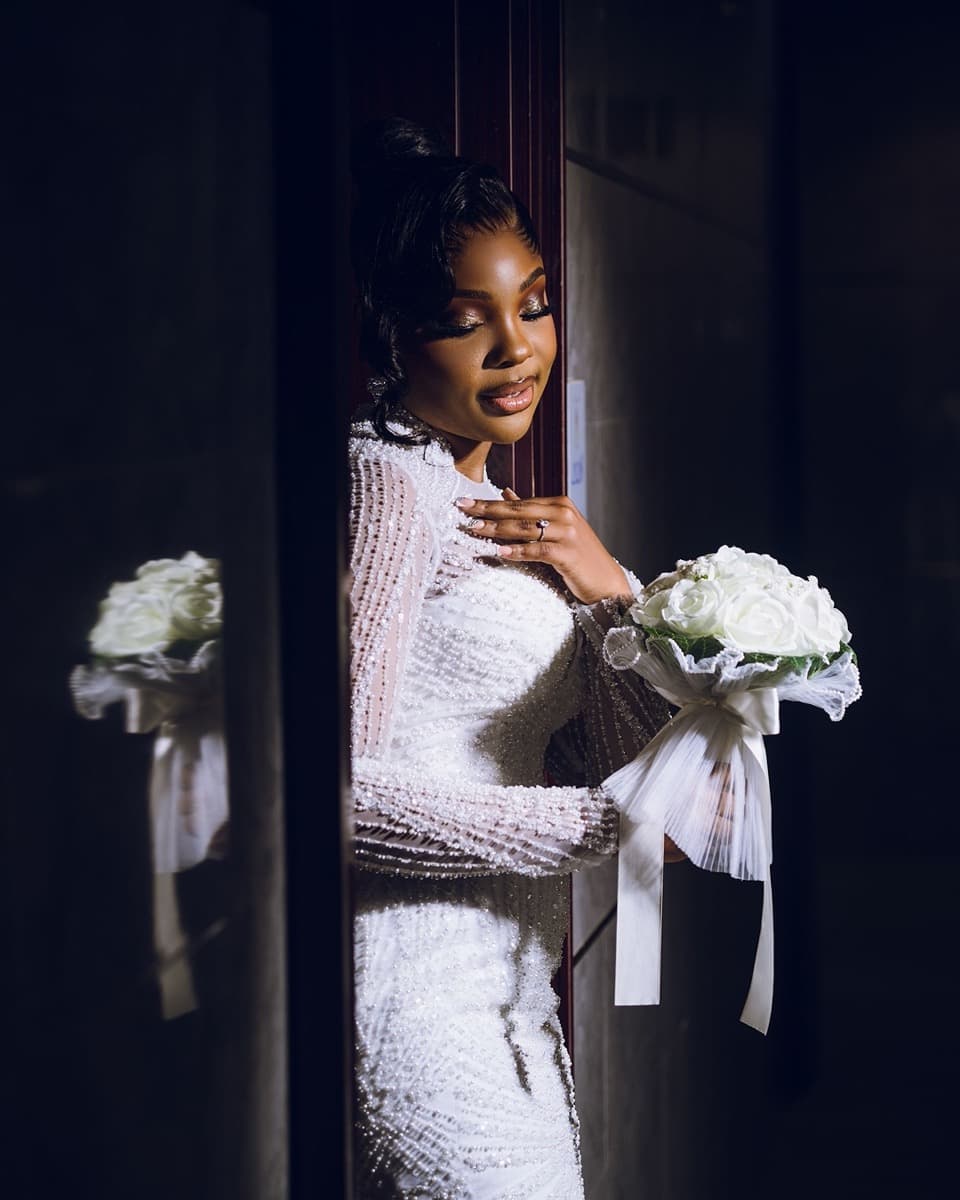
Nigerian weddings often involve more than one outfit for the bride — a traditional look built around aso oke, lace, or aso-ebi, and a separate Western-style white gown for a different part of the celebration. That's not incidental — it's a real, documented two-ceremony structure with its own colonial-era history. Here's what's actually behind the white gown specifically, distinct from the traditional attire we've covered elsewhere.
Two Weddings, Not One — and Only One Is Legally Required
This is genuinely documented, not just wedding-blog convention: many Nigerian couples hold a traditional wedding — family rites built around aso-ebi and traditional attire — as a separate event from a white wedding, a church or reception ceremony where the Western-style gown appears. The two can happen days, weeks, or months apart, or increasingly on the same day, with the bride changing from traditional attire into the white gown partway through. Church weddings in Nigeria trace back to evangelical missionary activity during British colonial administration, spreading alongside other Western marriage practices through the 19th and 20th centuries.
Here's a legal detail worth knowing that a lot of casual coverage skips: only a registry or court wedding — or a wedding held at a licensed place of worship — is legally binding in Nigeria. "Court marriage" and "registry marriage" are literally the same legal process under different names. The traditional wedding, while culturally central and often treated as the real event by families, isn't itself the legal marriage act. The white gown, in other words, belongs to a ceremony that's often more about religious and social significance than legal necessity. There's also a real, ongoing cultural conversation — some commentators frame the white wedding as an unnecessary colonial import, arguing the traditional wedding should be enough on its own, while plenty of brides continue to treat it as the emotional centerpiece of the celebration. Worth knowing that debate exists rather than presenting the white wedding as culturally uncontested.
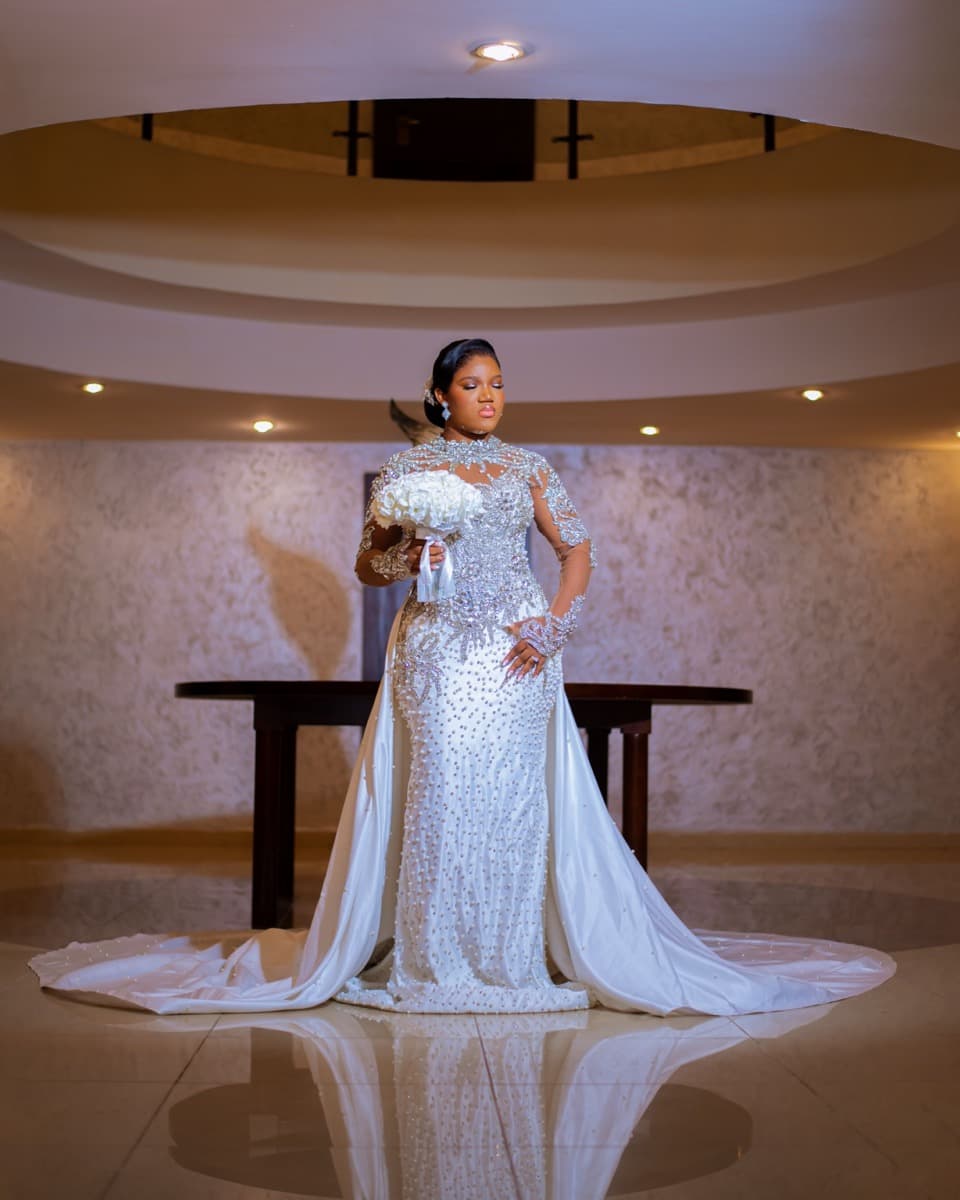
A structured, fitted mermaid silhouette — the corsetry-forward direction that comes up repeatedly in current bridal gown discussion.
The One Designer Genuinely Worth Naming
We looked specifically for real, independently documented Nigerian designers known for Western bridal gowns — not just traditional-wear names attached loosely to "bridal" coverage. Veekee James is the one that holds up under real scrutiny: her fashion house, founded in 2018, is specifically and extensively documented for sculpted, structured bridal silhouettes with corsetry and intricate beadwork, she won AMVCA Best Designer of the Year in 2021, has dressed named clients including Priscilla Ojo and Sharon Ooja, and announced her first US bridal tour across five cities in late 2025. Other names get attached to "top Nigerian bridal designer" lists without the same depth of sourcing — Andrea Iyamah is a real, documented Nigerian-Canadian designer, but her most-covered bridal press moment was actually her own traditional wedding attire, not Western-gown work specifically. Christie Brown, sometimes listed alongside Nigerian designers in this space, is actually a Ghanaian fashion house — worth correcting rather than repeating that error.
What's Actually Trending — With a Real Caveat
We want to be upfront: a lot of "2025/2026 bridal trend" content circulating online for Nigeria is thin, SEO-farm material rather than real fashion journalism, and we couldn't independently verify specific silhouette or neckline breakdowns against top-tier Nigerian fashion press. What we can say with more confidence, since it shows up consistently even in lower-tier sources: structured, corseted bodices paired with fuller tulle skirts are a repeatedly cited direction, alongside convertible gown features like detachable trains or overskirts. Treat these as directionally plausible rather than confirmed press-verified trends. One real, concrete example worth knowing instead of a vague trend claim: Priscilla Ojo's white wedding dress, documented by BellaNaija in April 2025, was a Veekee James design — a genuine, dated, sourced data point rather than a general trend assertion.
The Real Cost Structure — Multiple Outfits, Not Just One Gown
This is a genuine, documented financial dynamic, not just a joke about Nigerian wedding costs: couples typically pay for separate attire across the introduction/engagement ceremony, the traditional wedding, and the white wedding — the gown is one cost among several, not the only outfit expense. Because of that, gown rental is a real and active market, not a niche workaround — multiple Nigerian bridal-rental businesses exist specifically to make an expensive-looking gown accessible without the full purchase price, letting a bride wear something valued around ₦1.5 million for roughly ₦200,000-₦400,000 in rental fees. The real trade-offs are documented too: rental gowns come with limited alteration flexibility (the dress has to fit you, not the other way around) and damage or penalty fees are a genuine consideration.
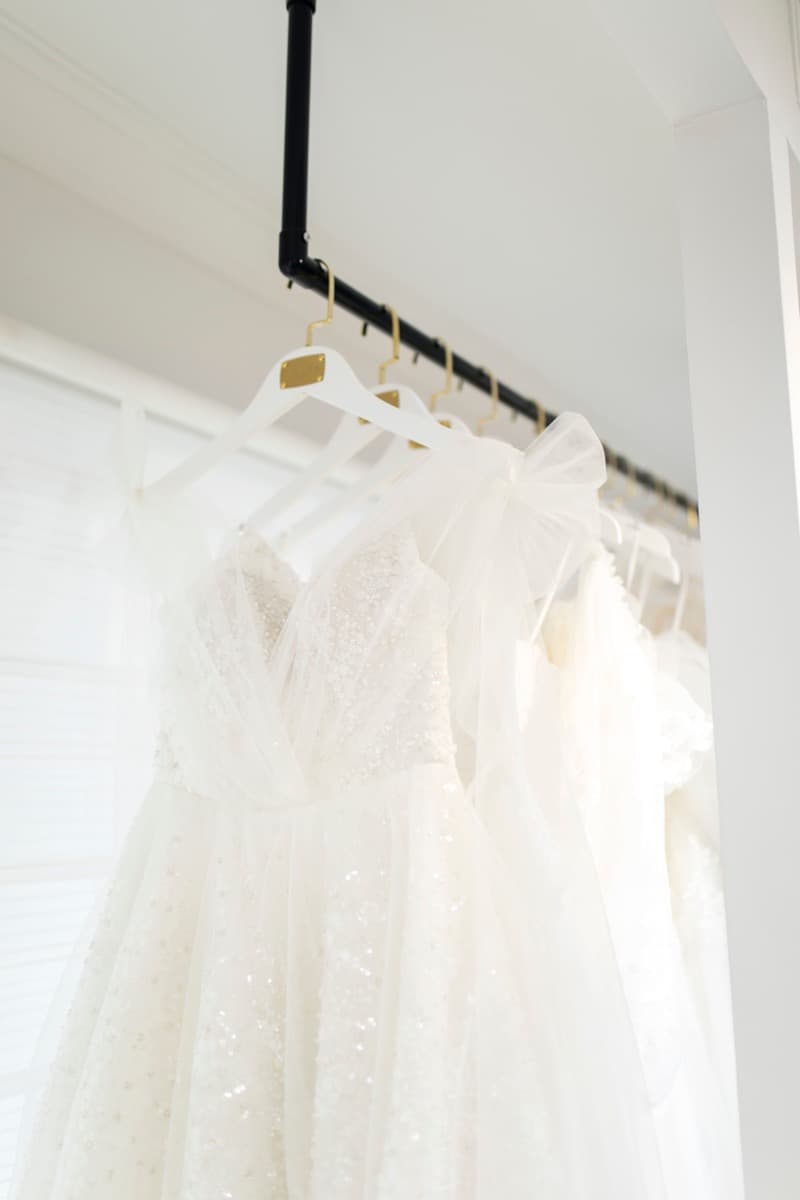
The tiered market in practice — ready-made, imported, and rental options sitting alongside fully custom work.
What to Budget
Pricing comes from Nigerian bridal and wedding-planning sites rather than any institutional market survey, so treat these as typical reported ranges, not authoritative statistics. Entry-tier ready-made or beaded lace gowns run roughly ₦100,000-₦180,000, with a broader general average cited around ₦100,000-₦500,000 depending on fabric and design. Imported boutique gowns from Turkey, Dubai, or Europe run higher, roughly ₦600,000-₦1.5 million, and fully custom designer work can run ₦2.5 million-₦10 million or more. Rental typically runs ₦80,000-₦200,000, with some options under ₦50,000. Alterations commonly add another ₦50,000-₦150,000 on top of whichever tier you choose. For scale, on the far high end: Veekee James disclosed her own white-wedding gown, worn in February 2024, cost $30,000 — roughly ₦44.3 million at the time — a real, dated, and multiply-corroborated figure, but very much an outlier rather than a representative price.
Ordering Yours
If you're planning both a traditional and a white wedding, it's worth budgeting for both outfits from the start rather than treating the gown as the only major clothing cost — and deciding early whether rental, ready-made, or custom fits your budget shapes everything else about the timeline. For the traditional side of the celebration, our aso-ebi guide and lace fabric guide cover the other half of what most Nigerian brides are actually planning around.